Over the past week many responsible breeders have voiced concerns about the proposed Innate Health Assessment (IHA) tool.
Instead of engaging with those concerns, some commentators have dismissed them as “hysterical headlines,” “scaremongering,” or “misinformation.”
That response misses the point entirely.
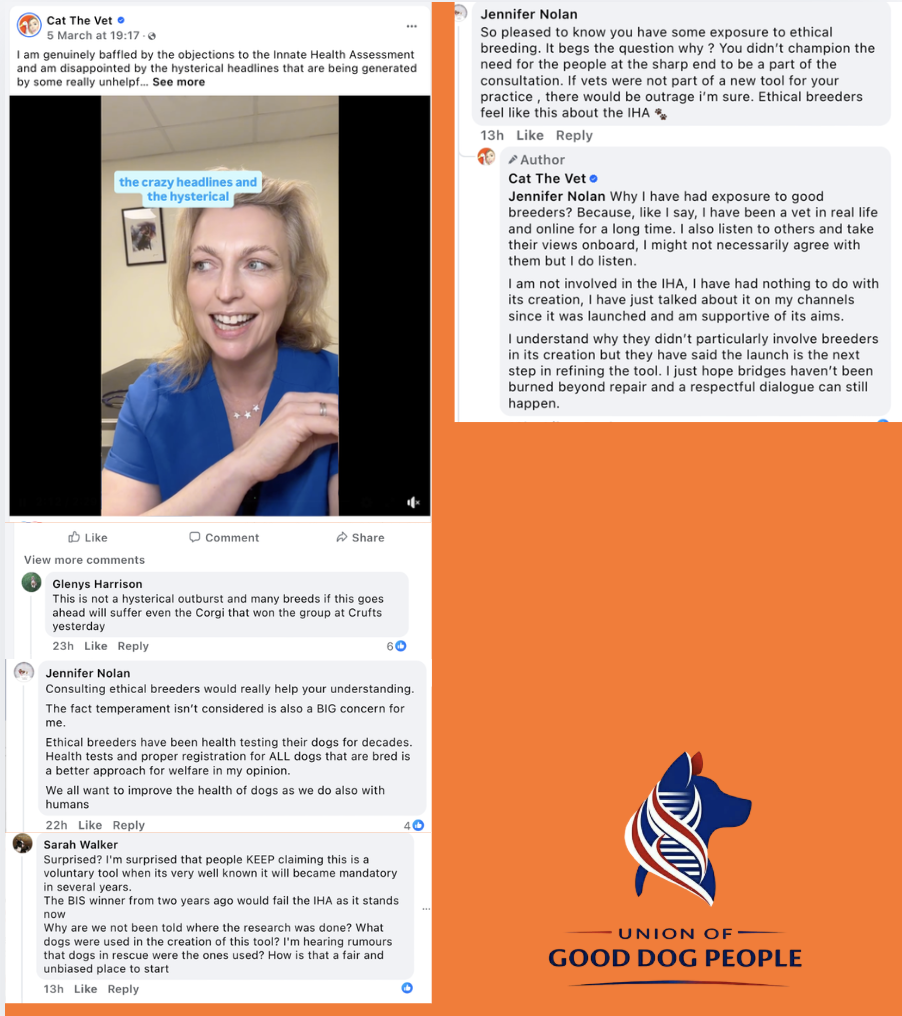
The people raising these concerns are not anonymous trolls on the internet.
They are experienced breeders who have spent decades health-testing their dogs, studying pedigrees, preserving vulnerable breeds, raising puppies in their homes and supporting owners for the lifetime of the dog.
These are the people who already do the most to safeguard canine welfare.To dismiss their concerns as hysteria is not engagement. It is dismissal.
And it feels a lot like gaslighting.
Gaslighting is when people raise legitimate concerns and instead of addressing those concerns, they are told their fears are irrational, exaggerated or imagined.
But the concerns being raised by ethical breeders are not imaginary.
The Innate Health Assessment is a blunt visual tool. Used without nuance, it risks penalising perfectly healthy dogs and discouraging the very breeders who already do the most to protect canine welfare.
Small, ethical breeders are not the problem in the dog world.
They are a huge part of the solution.
They are the people who spend years planning litters, carrying out health tests, socialising puppies in their homes and providing a lifetime safety net for every dog they breed. They are often the first line of defence against puppy farming, educating buyers and setting higher standards.
Yet when a tool that could shape future breeding policy was developed, these breeders were not meaningfully consulted.
Now, when those with the most practical experience raise questions about unintended consequences — such as whether healthy dogs might fail crude visual measurements — they are being told they are overreacting.
History shows that well-intentioned welfare initiatives can have unintended consequences if practical expertise isn’t involved. That is precisely why dialogue matters.If breeders sound frustrated right now, that is entirely understandable. People tend to get frustrated when decisions affecting their life’s work are made without them.
That is exactly why the Union of Good Dog People was created.
Not to block welfare improvements, but to make sure ethical breeders finally have a seat at the table where decisions about dog breeding are made.If we truly want to end puppy farming and improve canine welfare, pushing responsible breeders out of the conversation is the worst possible outcome.
The people doing the right thing should be part of the solution.
Stay strong. Stay classy. And keep speaking up for your dogs.
And if you spot examples of breeders being dismissed as “hysterical” or accused of “misinformation” simply for asking legitimate questions, take a screenshot and share it in the comments.
The conversation about dog welfare should be respectful, evidence-based and inclusive — not dismissive.

Leave a Reply